After deciding that a psychiatric service dog could help, most people have another important question:
Where can you get a service dog?
Many families think that service dogs have to come from a professional organization.
Others see people online training their own service dogs and wonder if they could do that too.
The truth is, both options are possible.
Under the ADA, people with disabilities may train their own service dogs. Professional training is not federally required.
But just because you can legally train your own dog doesn’t mean it’s the best choice for everyone.
Option 1: A Professionally Trained Service Dog
A professional service dog program often handles most of the dog’s early training before matching the dog with a handler.
These programs can be very different from each other.
Depending on the organization, dogs may receive training in:
- Basic obedience
- Public-access manners
- Calm behavior around distractions
- Disability-specific tasks
- Working around medical equipment
- Transportation
- Stores and restaurants
- Handler-specific needs
If you don’t have much experience training dogs, this can take a lot of pressure off you.
The downside?
Getting a professionally trained service dog can mean long waiting lists, applications, eligibility rules, travel, or high costs, depending on the program.
Option 2: Owner-Training
Training your own dog lets families be much more involved in the process.
You can train on your own, work with a private trainer, go to classes, or mix different methods.
One benefit is that you can tailor the training to fit your daily needs.
You aren’t stuck with a set list of tasks.
But owner-training takes something people often overlook:
Time
You are not just teaching one task, like deep pressure therapy.
You might also need to teach your dog to stay calm when a grocery cart goes by, ignore food on the floor in restaurants, settle during appointments, walk through crowds, stay focused around other animals, and respond when you need help most.
That is a lot to take on.
Owner-Trained Doesn’t Have to Mean “Completely Alone”
This is especially true for families.
Choosing to train your own dog doesn’t mean you have to turn down professional help.
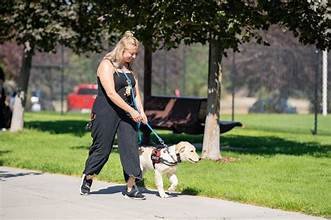
You can still work with:
- A service-dog trainer
- A positive-reinforcement trainer
- Group obedience classes
- Private lessons
- Specialized online training
- Behavior professionals when needed
Sometimes, the best way to owner-train is to work as a team.
You do most of the daily training, but you still get advice from professionals when you need it.
What Should Families Consider?
Before you decide, take an honest look at:
Time: Can you practice consistently?
Experience: Are you comfortable teaching and reinforcing behaviors?
The dog: Does the dog actually have the temperament for service work?
The environment: Can you safely expose and train the dog around different public situations?
The tasks: Are the needed tasks simple enough to train with guidance, or particularly complicated?
Your own needs: Will training a dog for a long time make your daily life easier, or will it add more stress?
There is no single right answer.
Some people do very well with owner-training.
Others find the process too much to handle.
Needing professional support is not a failure.
The goal is not to show that you can do all the training on your own.
The real goal is to have a dog that can safely and reliably do the work you need it to do.
What Matters Most
No matter where your dog comes from, the main ADA rule stays the same:
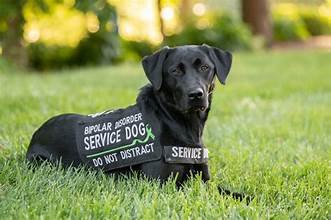
The dog must be individually trained to perform work or tasks related to the person’s disability.
The name of the training program does not make the task.
The training itself does.
In our next post, we will take a closer look at one specific task: Deep Pressure Therapy.