
Teaching independence sounds simple… until you’re in the middle of it.
Want your child to learn life skills.
You want them to feel confident.
You want to prepare them for the future.
But somewhere along the way, it can start to feel like too much—for both of you.
Your child gets frustrated.
You feel overwhelmed.
And what started with good intentions turns into stress.
If that sounds familiar, you’re not alone.
The truth is:
Independence isn’t built through pressure—it’s built through patience, support, and small steps.
Why It Can Feel So Overwhelming
Children with autism often process information differently.
Tasks that seem “simple” can actually involve:
- Multiple steps
- Sensory challenges
- Communication barriers
- Emotional regulation
When teaching new skills, watch for signs that your child is becoming overwhelmed, such as increased frustration or withdrawal, so you know when to slow down or take a break.
Not because your child can’t learn…
But because they need a different approach.
1. Start Smaller Than You Think
When we think of independence, we often picture the whole task.
But for your child, that task may need to be broken down.
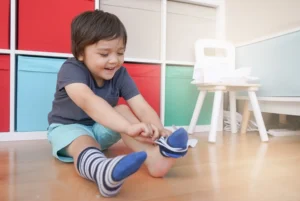
Instead of:
👉 “Get dressed.”
Try:
✔️ “Put your arm in the sleeve.”
✔️ “Pull up your pants.”
Small steps make success possible, and tracking these incremental achievements can help you see progress and stay motivated without feeling overwhelmed.
2. Focus on One Skill at a Time
It’s easy to feel like you need to teach everything at once.
But that usually leads to overwhelm—for both of you.
Pick:
- A routine
- One skill
- One focus
Work on that consistently before adding something new.
3. Use Visual Supports
Many children with autism understand what they see better than what they hear.
Visual supports can include:
- Picture schedules
- Step-by-step charts
- First/Then boards
These tools reduce confusion and increase confidence.
4. Build Predictable Routines
Consistency is powerful.
When a child knows what to expect, they’re more likely to:

- Stay calm
- Participate
- Try new things
The more predictable the routine, the less overwhelming it feels.
5. Give Processing Time
Sometimes we ask something… and expect an immediate response.
But many children need time to:
- Process the instruction
- Understand what’s being asked
- Organize their response
Pause. Wait. Give them that space.
6. Celebrate Small Wins
It’s easy to focus on what isn’t happening yet.
But progress often looks like:
- Trying instead of refusing
- Completing part of a task
- Needing less help than before
Celebrate those moments.
They matter more than you think.
7. Know When to Step In (and When to Step Back)
This is one of the hardest parts.
We want to help—but we also want them to learn.
A good balance looks like:
- Offering support when needed
- Stepping back when they’re ready
- Letting them try (even if it’s not perfect)
Independence grows in those in-between moments.
8. Keep It Low Pressure
When learning feels stressful, children are more likely to:
- Shut down
- Resist
- Avoid trying
Try to keep the tone:
- Calm
- Encouraging
- Flexiyou
It doesn’t have to be perfect.
Every child is different, and some skills may take time. Embracing patience helps you stay calm and supportive throughout the process.
Every child is different.
Some skills will come quickly.
Others may take time—and that’s okay.
There is no universal timeline for independence.
9. Take the Pressure Off Yourself Too
This isn’t just about your child.
It’s about you, too.
You don’t have to:
- Teach everything perfectly
- Get it right every time
- Have all the answers
You are learning alongside your child—and that’s enough.
A Gentle Reminder for Parents
You are not behind.
Your child is not behind.
You are both moving forward—step by step, moment by moment.
And that’s exactly how independence is built.
Conclusion
Teaching independence doesn’t have to feel overwhelming.
It’s not about doing everything at once.
It’s about:
- Small steps
- Consistent support
- Trusting the process
And most importantly…
Meeting your child where they are.
Because that’s where real progress begins 💛