Is it cheaper to train your own service dog? Compare owner-trained and professionally trained service dogs, including costs, time, risks, and support. However, after seeing that professionally trained service dogs can cost thousands of dollars, one thought naturally comes to mind:
“Why don’t I just train the dog myself?”
It can sound like the perfect solution.
Buy or adopt a dog.
Train them at home.
Save thousands of dollars.
And yes, owner-training can be a legitimate path.
But the real comparison isn’t simply:
Free training vs. $25,000 training.
Owner-training still has expenses, and one of the highest costs may be something that doesn’t appear on a receipt:
Your time.
Let’s look at the financial and practical differences between owner-training and professionally training a service dog.
First: Can You Legally Train Your Own Service Dog?
Yes.
Under federal ADA rules, a person with a disability is allowed to train their own service dog. The ADA does not require service dogs to be professionally trained or certified through a particular organization.
That is important because many websites make it sound as though you need to pay for registration, a certificate, or official service-dog identification.
You don’t.
What matters under the ADA is that the dog is individually trained to perform work or tasks related to the handler’s disability.
What Does Owner-Training Mean?
Owner-training doesn’t necessarily mean doing everything completely alone.
Some handlers:
- Train entirely themselves
- Attend regular obedience classes
- Hire a professional trainer for difficult skills
- Work with a service-dog trainer periodically
- Combine home training with professional coaching
However, having professional guidance can be extremely helpful, especially if this is your first experience training a service dog.
The dog needs more than basic manners.
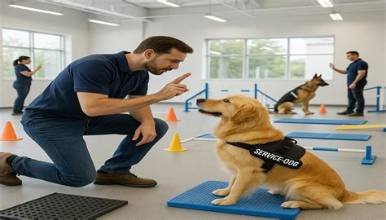
Training may eventually include:
- Reliable obedience
- Calm behavior around distractions
- Appropriate public behavior
- Disability-related tasks
- Ignoring food and strangers
- Settling quietly for extended periods
- Working around other animals
- Remaining under control in unfamiliar environments
Federal ADA rules also allow a business to require the removal of a service dog if it is out of control and the handler does not take effective action, or if the dog is not housebroken.
That makes reliable training especially important.
What Does Owner-Training Cost?
There isn’t one standard price.
Your expenses might include:
The Dog
You may need to purchase or adopt a dog with an appropriate temperament and health history.
The least expensive puppy is not necessarily the least expensive service-dog prospect.
Veterinary Care
Before investing heavily in training, families may want appropriate health evaluations.
You’ll also pay for routine veterinary care throughout training.
Puppy and Obedience Classes
Even experienced dog owners can benefit from structured classes.
Private Training
You may eventually need help with public behavior or specialized disability-related tasks.
Training Supplies
Expect expenses for:
- Treats
- Leashes
- Harnesses
- Training pouches
- Crates
- Beds
- Travel equipment
- Grooming
- Enrichment toys
Transportation
Training a service dog means exposing the dog to many appropriate environments.
That may require frequent travel.
Time
This one is enormous.
Owner training can require consistent work for many months.
That means training:
- Before work
- After work
- On weekends
- During public outings
- At home
- In new environments
There are no shortcuts simply because you’re doing the work yourself.
The Biggest Financial Risk of Owner-Training
One issue deserves special attention:
What happens if your dog turns out not to be suitable for service work?
Programs spend significant time evaluating health, temperament, and suitability before matching dogs with clients. NEADS, for example, says most of its dogs are purpose-bred for temperament, health, and personality traits suited to service work and are evaluated throughout an 18-to-24-month training period. If you are owner-training, it is smart to assess your dog’s potential as early as possible. Consider asking a professional trainer or behaviorist to help evaluate your dog’s temperament and suitability for service work. There are formal temperament tests and health screenings that can identify traits like confidence, resilience, and focus. An early professional assessment can help you make an informed decision and reduce the risk of investing months of effort into a dog that might not be the right fit for service work.
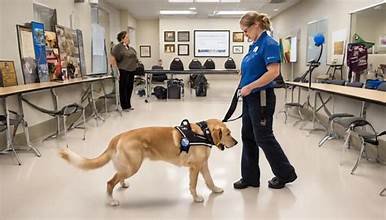
However, a family attempting owner-training can invest months of work and significant money before discovering that a particular dog isn’t suited to the job.
Will the dog become too fearful in public?
Could the dog develop a health problem?
Maybe the dog struggles to recover from distractions.
Maybe the dog’s temperament isn’t appropriate for the demands of working.
That doesn’t make the dog a bad dog.
It may simply mean that service work isn’t the right job for that dog.
Then the family has another difficult decision:
Do we keep this dog as a pet and begin again with another prospect?
That possibility should be part of the financial plan from the beginning.
What Does Professional Service Dog Training Cost?
Professional service-dog training can exceed $25,000, according to the American Kennel Club.
But once again, that doesn’t automatically mean the recipient pays $25,000.
Current nonprofit examples show very different models.
Canine Companions: Service dogs and follow-up services are provided at no charge to recipients. Generally, the application process for nonprofit service dog organizations begins with filling out an online application form on the organization’s website. After submitting, applicants may be asked to provide documentation of their disability, participate in interviews, and complete assessments to help the program understand their needs and ensure a good match. Reviewing the specific requirements and timelines for each organization is an important first step.
Who We Serve – Canine Companions https://canine.org/service-dogs/our-dogs/service-dogs/
4 Paws for Ability: The organization reports spending around $40,000 per dog, while clients currently have a $20,000 fee-for-service fundraising commitment, with an additional amount for certain breeds.
NEADS: The organization reports spending nearly $45,000 per dog and currently asks accepted clients to raise $12,000.
So don’t assume owner-training is automatically the only affordable option until you investigate nonprofit programs.
Owner-Trained vs. Professionally Trained
Owner-Training May Offer:
More control over training
You are involved in nearly every step.
The ability to choose your own dog
This matters to some handlers.
Expenses spread over time
Instead of a single large program fee, costs may be incurred gradually.
Potentially lower direct training expenses
Especially for an experienced handler who needs limited professional assistance.
But it also brings:
A large time commitment
You become a major part of the training team.
Unpredictable expenses
You don’t always know what professional assistance you’ll need later.
Greater responsibility
Please recognize training or behavior problems and know when to ask for help.
The possibility of starting again
A dog may not ultimately be suitable for service work.
A Professional Program May Offer:
Experienced dog selection
Programs may breed, evaluate, and select dogs specifically for service work.
Professional training
Experienced trainers handle much of the early and advanced preparation.
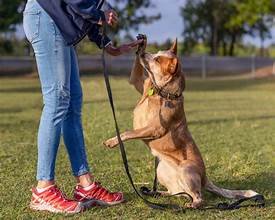
Matching
The program selects a dog whose skills and temperament match the applicant’s needs.
Handler education
Programs usually train the person receiving the dog as well.
Follow-up support
Many established programs continue to help teams after placement.
For example possible drawbacks include:
- Long application processes
- Waiting lists
- Eligibility restrictions
- Geographic restrictions
- Fundraising requirements
- Travel for training
- Less control over breed or individual dog selection
Is There a Middle Ground?
Absolutely.
Some organizations will work with a handler and their own dog.
Assistance Dogs International lets families search its accredited-member directory for organizations willing to consider working with an owner and a personal dog.
For an owner-and-dog team seeking ADI certification specifically, ADI requires participation in the accredited organization’s training program for at least six months. That is an ADI program standard—not a federal ADA requirement.
This type of hybrid approach may appeal to families who want to be involved in training while still having professional support. However, hybrid programs—where you work with your own dog but receive professional guidance—are less common than fully owner-trained or traditional program-trained options. Not all organizations offer these arrangements, and those that do may have strict requirements, such as initial temperament and health assessments, commitments to attend training sessions, and minimum participation periods. It’s important for families to research availability in their region and understand that options and criteria can vary widely.
How Should Your Family Decide?
Don’t start with:
“Which option is cheapest?”
Start with:
Do I have the time?
Can you train consistently for many months?
Do I understand dog behavior?
Are you comfortable recognizing fear, stress, overstimulation, or unwanted behavior?
Can I afford professional help if I need it?
Even owner-trainers may eventually need assistance.
What tasks do I need?
More specialized tasks may require experienced guidance.
What happens if this dog can’t become a service dog?
Could your family keep the dog as a pet and afford another prospect?
Are nonprofit programs available for my needs?
Check before assuming professional training is financially impossible.
Assistance Dogs International maintains a directory that can be filtered by location, service-dog type, and other requirements.
My Biggest Advice for Families
Don’t make this decision based on the first price you see online.
Research both paths.
Call programs.
Talk with experienced trainers.
Ask exactly what professional programs charge.
Calculate what owner training could require.
And most importantly, think about what your family can realistically manage—not simply financially, but physically and emotionally. It’s normal to feel overwhelmed, disappointed, or stressed at different stages of the process, whether you are facing setbacks in training or waiting for a match from a program. Remember, you are not alone—many families experience these emotional ups and downs. If you are struggling, consider reaching out to support groups, trainers, or mental health professionals who can offer guidance and encouragement.
Owner-training can be a wonderful option for the right family.
A professionally trained dog can be a wonderful option for another.
Neither choice is automatically better.
The right choice is the one that safely produces a well-trained service dog that can meet the handler’s disability-related needs while also being properly cared for.
Final Thoughts
When comparing self-training vs. professional service dog training costs, remember that money is only one part of the equation.
Owner training may reduce some direct expenses but requires an enormous investment of time and carries more uncertainty.
Professional programs may represent tens of thousands of dollars in training, but nonprofit funding can dramatically reduce what a recipient actually pays.
Do your research before deciding that one route is automatically affordable.
For the complete cost picture, visit our Owning a Service Dog in 2026: What you need to know. The guide includes a detailed breakdown of owner-training and professional program expenses, realistic case studies of different families’ experiences, tips for reducing costs, and advice on what to expect during the service dog journey. This resource is designed to help you plan confidently and make informed decisions.
And if the numbers still feel overwhelming, don’t give up yet.