Taking care of a cat shouldn’t be harder just because someone has limited mobility.
But traditional litter box setups can make things tough. Boxes may sit directly on the floor. Heavy litter needs to be lifted. Cleaning requires bending, kneeling, twisting, or reaching.
If you use a wheelchair or have trouble moving in certain ways, cleaning a litter box can be one of the hardest parts of having a cat.
The good news is that a few small changes can make caring for your cat much easier.
Start With Height
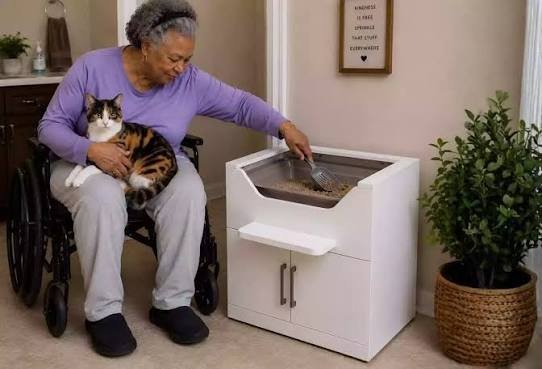
One of the biggest challenges is simply getting to the litter box. A box on the floor might mean you have to bend or reach farther than feels comfortable.
Depending on your mobility and your cat’s needs, putting the litter box on a sturdy, raised surface might help. Make sure the setup is stable and safe.
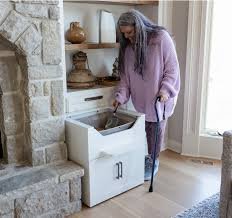
Your cat also needs an easy and safe way to get in and out. For older cats or cats with mobility problems, a ramp or a lower entry may be necessary. Accessibility should work for both you and your cat.
Consider a Low-Entry Box
Litter boxes with high sides can help keep messes in, but they might make scooping harder. A box with one lower side can make it easier to reach in, while still having higher walls on the other sides. This can also benefit senior cats or cats with arthritis.
Make Supplies Easy to Reach.
Don’t just focus on the box itself. Where is the scoop? The waste bags? Fresh litter stored?
If you have to reach into a low cabinet or lift a heavy container every time you clean, the setup isn’t really accessible.
Try keeping all your supplies together in a spot that’s easy to reach.
A smaller, lighter container of litter is often easier to handle than lifting a big bag every time. You can refill the smaller container when needed and ask for help if you need it.
Long-Handled Tools Can Reduce Bending
A litter scoop with a longer handle can help you clean the box without bending down as much. The same goes for small brooms, dustpans, or grabber tools you use near the litter box.
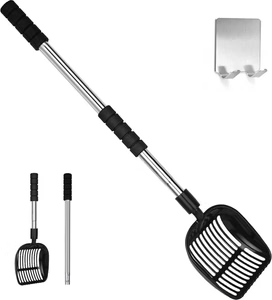
The goal is not to make things more complicated. It’s about cutting out extra steps or movements.
Think About Automatic Litter Boxes Carefully.
Automatic litter boxes might seem like the obvious solution. For some people, they may be extremely helpful. But they aren’t always the best choice for everyone. They still require emptying, cleaning, maintenance, and sometimes lifting. Some cats also dislike them. Before buying one, consider the whole maintenance process, not just the automatic scooping part.
Put the Box Somewhere Practical
People often hide litter boxes in basements, laundry rooms, or far-off corners because they don’t want them in plain sight. But making things accessible might mean rethinking where you put the box.
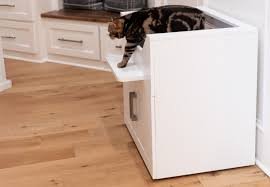
The best spot might be somewhere that’s easy to reach with a wheelchair or doesn’t require much walking.
Make sure pathways stay clear. Try not to put the box in a tight spot where it’s hard to turn or reach.
Use Mats That Don’t Create Another Hazard.
Litter mats can help keep litter from spreading. But they can also catch on wheelchair wheels or become a tripping hazard.
If you use a mat, make sure it’s flat and doesn’t get in the way. Sometimes making things accessible means taking something away instead of adding more.
Ask for Help With the Heavy Parts.
It’s perfectly fine to share pet-care tasks with someone else. Someone else can buy and pour the heavy litter bags, while you take care of daily scooping. A family member might do the deep cleaning, while you handle feeding and spending time with your cat.
Being an independent pet owner doesn’t mean you have to do every single task by yourself.
Watch What Works for Your Cat
Cats can be picky.
If you change the box too quickly, your cat might not want to use it. You change things; give your cat some time to get used to it. You might want to keep the old box nearby for a while as your cat gets used to the new setup.
Accessibility Is About Making Everyday Life Work.
Sometimes we think of accessibility as needing special equipment. But often, it’s really about asking yourself:
Why is this task hard, and what can I change to make it easier?
Raise something.
Move something.
Use a lighter container.
Change the tool.
Shorten the distance.
Remove a barrier.
These small changes can be the difference between pet care feeling overwhelming and feeling doable.
In our next post, we’ll go beyond the litter box and show you how to set up a fully accessible pet-care station at home.