Picking a dog for a child with ADHD, anxiety, autism, or another disability can be a very different experience than choosing a typical family pet.
It isn’t just about finding the cutest puppy.
It isn’t even necessarily about choosing the “best” breed.
For families with special-needs children, a better question to ask is:
What kind of dog will fit my child’s needs, personality, sensory preferences, and daily routine?
As a special-needs parent, I have learned to appreciate how unique each child’s needs can be. A dog that is perfect for one child might not be right for another.
If you are looking for the best dog for a child with ADHD and anxiety, here are some things to think about before choosing a breed.
Start With Temperament, Not Appearance
We all have breeds we love.
Sometimes we have dreamed about owning a certain dog for years.
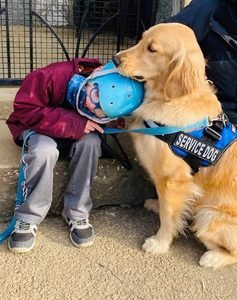
But when picking a dog for a child who struggles with impulsivity, anxiety, sensory overload, or emotional ups and downs, temperament should come before appearance.
A calm, patient dog may tolerate sudden movement better than a highly sensitive dog.
A confident dog may be less bothered by unpredictable noises.
A dog that enjoys being near people without constantly demanding attention may be easier for a child who sometimes needs space.
That doesn’t mean every dog needs to be sleepy and quiet.
Some children with ADHD may love having an active dog that encourages outdoor play and movement.
The goal is to find a dog whose energy matches your child’s, not one that overwhelms them.
Think About Your Child’s Energy Level
ADHD can look very different from one child to another.
Some children seem to be moving constantly.
Others might have short bursts of high energy and then need some quiet time.
Think realistically about what happens in your home.
Would your child enjoy throwing a ball in the yard every afternoon?
Would walking the dog become a positive routine?
Or would a dog that needs hours of exercise each day add more stress for the adults in your home?
High-energy breeds can be wonderful in the right household.
But an under-exercised dog can become frustrated, destructive, noisy, or difficult to manage.
Sometimes the dog that seems perfect in theory isn’t the one that fits your real life.
Consider Anxiety and Predictability
Children with anxiety may benefit from predictability.
Dogs can be very different in how they react to what’s happening around them.
Some are naturally watchful and may bark at every sound outside.
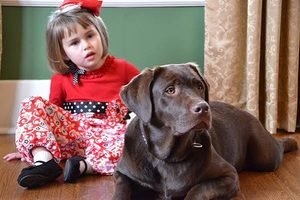
Others stay calm around visitors, during busy times at home, or when they hear unexpected noises.
For a child who becomes anxious when a dog suddenly barks, a very vocal breed might not be ideal.
On the other hand, a child who feels safer knowing a dog alerts when someone approaches the house might feel differently.
There isn’t one answer that works for everyone.
What matters is understanding your own child.
Sensory Needs Matter Too
Many families don’t think about this until after the dog is already home.
A dog brings sensory experiences with it.
There is fur.
They may be drool.
Have wet noses.
There are barking sounds.
There are dog smells.
You might hear nails clicking on the floor.
A dog may brush against a child’s legs unexpectedly.
For many children, none of that is a problem.
For a child with strong sensory sensitivities, some of those things can be very difficult.
Think about coat texture too.
One child may love burying their hands in soft fur.
Another may dislike the feeling completely.
If you can, spend time with different dogs before you decide.
Size Can Make a Difference
Large dogs can feel reassuring and sturdy.
They can also accidentally knock over a smaller child.
Small dogs might be easier to handle, but some are more delicate and may not like rough play.
Again, the individual dog matters more than the stereotype.
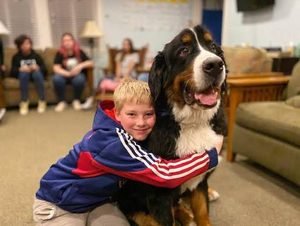
Still, size is something to think about.
If your child is impulsive and sometimes grabs without thinking, a very delicate dog may not be a good match.
If someone in your home has limited mobility, a large dog that pulls can be hard to handle.
Breeds Families Often Research
There isn’t a single breed I would call the perfect dog for every child with ADHD and anxiety.
But some breeds are popular with families because they are easy to train, friendly, or loving.
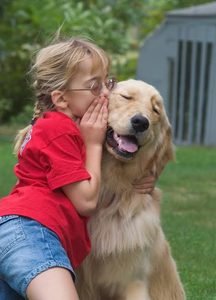
Golden Retrievers are often loved for their friendly, people-oriented personalities. They can be wonderful family dogs, but they need regular exercise and grooming.
Labrador Retrievers are social, trainable, and usually enthusiastic about family activities. Young Labs can also be extremely energetic, so families need to be prepared for that stage.
Poodles come in several sizes and are intelligent and highly trainable. Their coat can be helpful for families concerned about shedding, although grooming needs are significant.
Cavalier King Charles Spaniels tend to be affectionate companion dogs and may appeal to families looking for a smaller dog. As with any breed, families should research health concerns carefully.
Don’t overlook mixed-breed dogs. An adult dog with a known temperament can sometimes be a better match for a family than a puppy whose personality is still changing.
The breed gives you clues.
But the individual dog will tell you even more.
Puppies Are Not Always the Easiest Choice
Puppies are adorable.
They also bite.
Can jump.
Chew things.
Wake people up.
They have accidents.
They need a lot of training.
For some special-needs households, raising a puppy can be wonderful.
For others, an adult dog with a set temperament might be a much easier choice.
With an adult dog, you can see things like energy level, size, coat, confidence, friendliness, and some behavior patterns before you bring the dog home.
That information can be valuable.
Watch How Your Child and the Dog Interact
Sometimes adults focus so much on whether the child likes the dog that they forget to pay attention to the dog’s feelings.
The relationship needs to work for both the child and the dog.
Does the dog voluntarily approach the child?
Can the dog comfortably move away?
Does the child understand when the dog needs space?
Does the dog seem relaxed in response to your child’s movements and voice?
A healthy relationship means respecting both the child and the dog.
Teaching children to notice when a dog needs space is also an important life skill.
A Family Dog Is Not Automatically a Service Dog
This difference matters.
A loving family pet can offer companionship, routine, comfort, motivation, and emotional connection.
Those things can be incredibly meaningful.
But that doesn’t automatically make the dog a service dog.
A service dog is individually trained to perform disability-related work or tasks for a person with a disability.
Families don’t need to make every helpful pet relationship more complicated than it needs to be.
Sometimes a wonderful family dog is exactly what the child needs.
Ask What You Want the Dog to Add to Your Family
Before you start looking at breeds, take a moment to finish this sentence:
“I hope having a dog will help our family by…”
Maybe you want companionship for your child.
You may want to encourage outdoor activity.
Does your child feel lonely?
Maybe caring for an animal could help build a sense of responsibility.
Maybe you want the joy of having a pet.
There is nothing wrong with any of those answers.
Knowing what you really want helps you make a better choice.
Final Thoughts
The best dog for a child with ADHD and anxiety isn’t always the one at the top of an online list.
It’s the dog whose temperament, needs, energy, and personality fit your child and your whole family.
Take your time.
Meet different dogs.
Be honest about what your family can handle.
And don’t pick a dog just because it looks perfect in a photo.
For families with special-needs children, finding the right match is much more important than picking the “right” breed.