Does your child need constant reminders to get through everyday activities?
For example getting ready for school means repeating the same instructions over and over.
Or perhaps bedtime becomes stressful because your child has trouble remembering what comes next.
If this sounds familiar, you’re certainly not alone.
Children with autism and ADHD may have difficulty with planning, organization, transitions, or remembering multi step instructions.
A visual routine can help make expectations easier to understand.
And the best part?
You don’t need to create anything complicated.
What Is a Visual Routine?
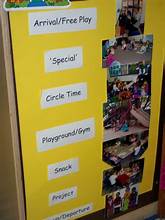
A visual routine uses pictures, words, or symbols to show the steps involved in an activity.
Instead of relying entirely on verbal reminders, children can look at it whenever they need help remembering what comes next.
Visual routines can be used for:
- Morning preparation
- Bedtime
- Personal hygiene
- Homework
- Household chores
- After-school activities
- Getting ready to leave the house
Some children benefit from picture schedules.
Others prefer a written checklist.
Choose the format that best matches your child’s abilities.
1. Choose One Routine to Work On
Don’t try to organize your child’s entire day at once.
Start with a routine that regularly causes frustration.
For example, if mornings are difficult, begin with a morning checklist.
If bedtime takes longer than expected, create a visual bedtime routine.
Start small to make it easier to identify what works.
2. Break the Routine Into Clear Steps
Keep each instruction simple.
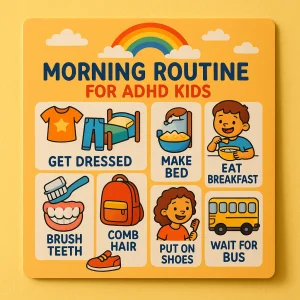
For example, a morning checklist could include:
- Get dressed
- Eat breakfast
- Brush teeth
- Put on shoes
- Get backpack
You can break each activity into smaller steps if necessary.
For a child who struggles with getting dressed, you might provide a separate checklist showing the steps involved.
3. Choose Visuals Your Child Understands
There is no rule saying every visual schedule must look the same.
Some children understand photographs better than drawings.
Others prefer written instructions or simple symbols.
Consider using pictures of familiar objects or spaces.
For example, a photograph of your child’s own backpack may be more meaningful than a generic picture.
Invite your child to help choose the images when possible.
4. Make the Checklist Easy to See
Put the routine somewhere your child can access it.
Place a morning checklist near the bedroom door.
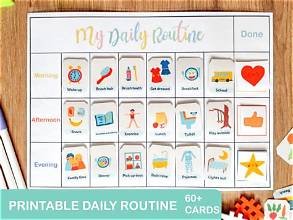
A hygiene chart may work best near the bathroom sink.
Attach an after-school routine to the refrigerator.
Try not to overcrowd the page with unnecessary decorations.
Clear, readable instructions are usually more useful than an elaborate design.
5. Practice the Routine Together
A visual checklist is a tool, not an automatic solution.
Your child may need help learning how to use it.
Start by going through the steps together.
Point to the next picture or instruction.
Allow your child to complete the step with whatever support they need.
Gradually adjust reminders as your child becomes more familiar with the routine.
6. Celebrate Progress and Make Adjustments
Pay attention to what works.
Does your child seem to understand the sequence?
Are they using the checklist?
Do certain steps still cause frustration?
If the routine isn’t working, change it.
Maybe there are too many steps.
Perhaps the pictures are confusing.
Or maybe the schedule needs to include a break.
Remember that routines should support your child, not become another source of pressure.
Final Thoughts: Keep It Simple
As parents, we sometimes feel that helping our children requires expensive tools or complicated systems.
But simple solutions can make a meaningful difference.
A visual routine can give your child a clearer picture of what needs to happen next.
It can also provide opportunities to practice independence and build confidence.
Start with one routine.
Keep the instructions manageable.
And remember to adjust the system as your child’s needs change.
The best visual routine isn’t the prettiest one. It’s the one that helps your child.