When most of us hear the words service animal, we picture a dog. That makes sense. Dogs are by far the most familiar type of service animal. But there is another type of animal that might surprise you.
The miniature horse.
It’s true.
Under the Americans with Disabilities Act, the legal definition of a service animal is generally limited to dogs. However, the ADA has a separate provision that specifically addresses miniature horses individually trained to perform work or tasks for a person with a disability. Covered public entities and businesses must consider allowing them when doing so is reasonable.
Mini Horses Can Be “De Facto” Service Animals Too (Plus They Are Really Cute) | ADA Title III
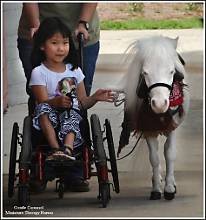
This does not mean a miniature horse can go everywhere a service dog can. However, miniature horses do have a unique place in disability access law.
For some people and families, a miniature horse might be worth considering.
Parent Note: This article provides general information about U.S. federal law. State laws and individual circumstances can vary.
Why Would Someone Use a Miniature Horse Instead of a Dog?
I wondered the same thing when I first heard about miniature service horses. Why would someone choose a horse? There are actually several reasons why a miniature horse might be trained for disability-related work.
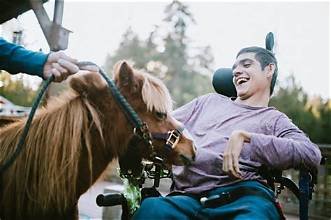
Miniature horses have been used for tasks such as:
- Guiding a person who is blind or has low vision.
- Providing stability and balance.
- Assisting some people with mobility disabilities.
- Helping pull a wheelchair.
- Providing leverage to help a person get up after a fall.
The Department of Justice has specifically discussed miniature horses performing these types of mobility and guiding tasks.
For some people, the size and build of a miniature horse can make it a good fit for certain mobility tasks.
However, choosing a miniature horse is not just about preferring a horse over a dog.
Just like a service dog, the animal must be individually trained to perform work or tasks related to the person’s disability.
Comfort and companionship alone do not qualify.
How Small Is a Miniature Horse?
When you hear ‘miniature horse,’ you might picture an animal about the size of a large dog.
Some miniature horses are actually close to that size.
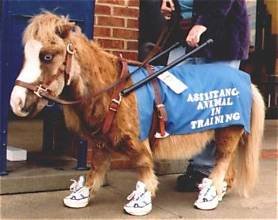
The Department of Justice says miniature horses generally range from about 24 to 34 inches at the shoulder and weigh approximately 70 to 100 pounds.
Even so, a miniature horse is still a fairly large animal.
This size is one reason why the rules for miniature horses are a bit different from those for service dogs.
Are Businesses Required to Allow Them?
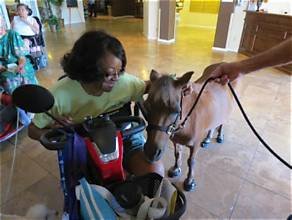
Covered businesses and public entities must consider reasonable modifications that would allow an individually trained miniature horse to accompany a person with a disability.
However, the ADA allows the location to consider four specific factors:
- The type, size, and weight of the miniature horse and whether the facility can accommodate it.
- Whether the handler has sufficient control of the horse.
- Whether the horse is housebroken.
- Whether the horse’s presence would compromise legitimate safety requirements necessary for the facility to operate safely.
Service Animal Policy https://www.zoomontana.org/service-animal-policy
This means that access for miniature horses can depend more on the specific location than it does for service dogs.
A large, open building might be able to safely accommodate a miniature horse, but a small or oddly shaped space could make it difficult.
Decisions should be based on the real situation, not just on a general rule like:
“We don’t allow horses.”
Does the Miniature Horse Need Certification?
The important issue under the ADA is whether the miniature horse has been individually trained to perform disability-related work or tasks and whether it can reasonably be accommodated.
Families should be careful about websites that sell official-looking ‘service animal registrations’ or ID cards.
Buying a certificate or card online does not give you any disability access rights.
Training and the relationship between the task and the person’s disability are what matter.
What About Schools?
Because public schools are covered by Title II of the ADA, the miniature-horse provision can also become relevant in a school setting.
Just as we discussed in our article about service dogs in schools, bringing an animal into a school, however, requires planning.
A school may need to think about:
- Classroom space.
- Hallways.
- Transportation.
- Bathroom or relief areas.
- Emergency drills.
- Cafeterias.
- Assemblies.
- Field trips.
- Other students.
- Safe handling throughout the day.
The school can consider the miniature horse’s size and whether the particular facility can reasonably accommodate it.
In this situation, it is a good idea for families to start planning and talking with the school as early as possible.
There are more details to consider with a miniature horse than with a dog.
The Practical Side Families Need to Consider
Legal access is only one piece of the decision.
A miniature horse is still a horse, with all the responsibilities that come with caring for one. Families need to think about what happens when the animal is not working.
Where will the horse live?
Who will handle daily care?
Where will the horse exercise?
How will you transport the animal?
Who will provide veterinary care?
What happens when the regular caregiver is sick?
Do you have someone experienced enough to step in during an emergency?
These questions are just as important as thinking about public access.
A service animal is not something you can simply put away at the end of the day. It is a living creature with its own needs and care requirements.
Can You Fly With a Miniature Service Horse?
This is one area where families need to be especially careful, because airline rules differ from the general ADA rules.
Under current U.S. Department of Transportation rules, airlines are federally required to recognize dogs as service animals under the Air Carrier Access Act.
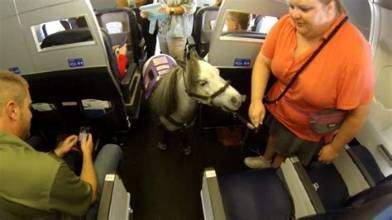
Airlines are not federally required to recognize miniature horses as service animals for air travel, although an airline may choose to transport other animal species under its own policies.
Families who use a miniature service horse should not assume that the same access rules at stores, schools, or other public places will also apply on airplanes.
Be sure to check the latest airline requirements before you travel.
Is a Miniature Horse Right for Every Family?
Definitely not.
And neither is a service dog.
The best service animal depends on the person’s disability, the tasks they need help with, their home, lifestyle, care options, finances, transportation, and other factors.
For some individuals, a dog will make far more sense.
For a few people, a well-trained miniature horse might be a good alternative to consider.
The most important thing is to choose a service animal based on need and function, not just because it is unusual.
Final Thoughts
Before looking into this topic, many parents might not have realized that miniature horses are included in federal disability-access rules.
That is exactly why sharing this information is important.
Families navigating disability already have enough confusing rules to sort through.
Knowing about different options can help families ask better questions, even if a miniature horse is not the right choice for them.
The main point is simple:
Under the ADA, service animals are generally dogs, but individually trained miniature horses have their own separate accommodation provision.
Their access is evaluated somewhat differently because their size, control, housebreaking, and the safety requirements of a particular facility can all be considered.
Miniature horses are not just large pets getting special treatment.
For the right person, they can be trained as working animals providing meaningful disability-related assistance. Sometimes, the best way to help another family is to let them know that this option exists.