When families research service dogs, most of the attention goes toward one number:
Additionally, how much will it cost to get the service dog?
But there is another question that may be even more important:
Furthermore, what will the annual cost of caring for the dog be once we bring it home?
Whether you receive your service dog for free, fund raise thousands of dollars, or pay for private training, the financial responsibility does not stop when your dog comes home.
A service dog is still a dog.
They need food, veterinary care, grooming, training, supplies, and eventually retirement care.
And because this dog may play an important role in your child’s or loved one’s independence and safety, keeping the dog healthy becomes especially important.
Moreover, how much should families expect?
There isn’t one universal yearly service-dog budget; consequently, different programs set different amounts.
As a result, breed characteristics, size, health, location, grooming needs, food choices, insurance, and training requirements can fluctuate.
For comparison, the American Kennel Club cites an average of about $2,500 per year for ordinary dog expenses such as food, grooming, veterinary visits, and pet sitting. In contrast, the figure reflects general dog ownership costs, not service-dog-specific expenses.
NEADS tells eligible veteran applicants that annual supplies, such as food and veterinary care, for one of its service dogs may average $1,000 to $2,000 per year.
Actual costs can be much higher if the dog becomes sick, requires professional grooming, needs additional training, or has expensive medication.
1. Food
Additionally, food will be one of your most predictable expenses.
Many service dogs are medium or large dogs, so they may eat considerably more than a small companion dog.
Your costs could also increase if your dog needs:
- Prescription food
- Allergy-friendly food
- Weight-management food
- Training treats
- Supplements recommended by your veterinarian
Because service dogs work closely with their handlers, maintaining a healthy weight and good physical condition is especially important.
2. Routine Veterinary Care
Preventive care is something I would never leave out of a service-dog budget.
Current AKC estimates suggest routine veterinary visits, including wellness exams, vaccines, lab work, and dental care, may run around $700 to $1,500 per year, depending on the dog and location. Emergencies and medications are not included in that estimate.
Regular care may include:
- Wellness examinations
- Vaccinations
- Flea and tick prevention
- heartworm prevention
- Dental care
- Bloodwork
- Health screenings
- Prescription medications
A medical problem doesn’t only affect your dog’s health. If your service dog cannot work for a period of time, it may also affect the handler’s daily routine.
3. Emergency Veterinary Care
This is the expense nobody wants to think about.
Dogs can get sick.
They can swallow something they shouldn’t.
They can get injured.
An emergency veterinary visit can become expensive very quickly.
Families may want to consider:
- Building a veterinary emergency fund
- Purchasing pet insurance
- Asking their veterinarian about payment options
- Setting aside a small amount each month
The AVMA recommends planning ahead for unexpected veterinary costs and notes that pet care expenses can vary substantially over a dog’s lifetime.
4. Grooming
For example, grooming costs depend heavily on the dog’s coat.
A short-coated Labrador may need mostly brushing, nail trims, baths, and ear care.
A dog with a coat requiring professional grooming could be much more expensive.
The AKC notes that professional grooming expenses can vary tremendously depending on breed and frequency.
Ask about grooming requirements before choosing a breed or program.
5. Service Dog Equipment
Because equipment wears out.
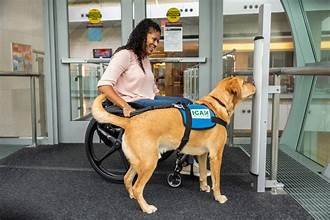
A family might eventually replace:
- Leashes
- Collars
- Harnesses
- Service-dog patches
- Boots
- Beds
- Crates
- Travel bowls
- Cooling gear
- Winter gear
- Car restraints
Remember, federal ADA rules do not require a service dog to wear a vest or special identification.
Some handlers still choose to use working gear because it can be practical and helps signal to others that the dog is working.
6. Refresher Training
However, training doesn’t stop after graduation.
Skills need to be practiced.
A handler might also need assistance if:
- A behavior problem develops
- The handler’s disability changes
- A new task is needed
- Public-access behavior needs improvement
- The family is struggling with handling
Some organizations provide lifetime or ongoing follow-up support. Canine Companions, for example, states that follow-up services are provided without charge to recipients.
If your program doesn’t provide that support, professional training may become another ongoing expense.
7. Travel Expenses
In addition, traveling with a service dog can involve extra planning and occasional expenses.

You may need:
- Portable bowls
- Extra food
- Protective boots
- Travel crates
- Veterinary paperwork
- Ground transportation
- Relief supplies
For U.S. air travel, airlines may require the Department of Transportation’s Service Animal Air Transportation Form, and an additional relief-related form may be required for flights lasting eight hours or more.
That is different from purchasing an online “service dog certificate.”
8. Backup Care
What happens to your service dog if you become sick or are hospitalized?
Who can feed, walk, and safely handle the dog?
Some families have relatives or friends who can help. Others may need to pay for:
- Pet sitting
- Dog walking
- Boarding
- Transportation
Having a backup care plan is just as important as budgeting for it.
9. Retirement
This is one cost families may not consider when first applying.
Service dogs eventually retire.
Your retired service dog may remain part of your family while you begin the process of obtaining a successor dog.
For a period of time, you might have expenses for two dogs.
That could mean:
- Two food bills
- Two veterinary bills
- Two sets of supplies
- Medical costs for an aging retired dog
- Expenses related to obtaining the next service dog
Planning for retirement early can make the transition less financially overwhelming later on.
Can Service Dog Expenses Be Tax-Deductible?
Possibly—but families need to be careful with this one.
IRS Publication 502 currently states that costs for buying, training, and maintaining a guide dog or another service animal may qualify as medical expenses when the animal assists a person who is visually impaired, hearing-impaired, or has another physical disability. Maintenance expenses can include food, grooming, and veterinary care.
That wording is narrower than the ADA definition of a service animal.
Families should speak with a qualified tax professional rather than assuming every service-dog expense qualifies.
Build the Yearly Cost Into Your Decision
It would be heartbreaking to spend years applying or fundraising for a service dog only to discover that everyday care is more than your family can comfortably manage.
Before applying, make a realistic monthly budget for:
Food + Veterinary Care + Preventatives + Grooming + Equipment + Training + Emergency Savings
Then ask yourself:
Can we comfortably provide this care every year for the dog’s entire life?
There is no shame in deciding you need more time to prepare.
Planning ahead is part of caring responsibly for a working dog.
Final Thoughts
The upfront price gets most of the attention, but the ongoing cost of a service dog deserves just as much consideration.
A service dog may provide years of independence, safety, confidence, and support.
In return, the dog depends on its handler and family for excellent lifelong care.
That partnership goes both ways.
For a complete overview of program fees, training expenses, owner training, financial help, and hidden costs, read our article, Owning a Service Dog in 2026: What you need to know