If there’s one part of flying that used to make my stomach drop, it was airport security. The lines, the noise, the hurry — it’s a sensory storm for any child, let alone one with Autism. Add a service dog into the mix, and suddenly the questions start swirling:
What will TSA do?
Will they separate us?
Can my child keep his service dog close?
I remember our first TSA experience like it was yesterday. My son, who was fascinated by Max’s training, gripped his leash tightly as we shuffled toward the scanner, eyes wide at the beeping machines and flashing lights. I took a deep breath, reminded myself that preparation was key — and to my relief, the whole process went smoother than I ever imagined.
Here’s what I learned — and what every parent traveling with a service dog should know — about navigating TSA calmly, confidently, and without surprises.
🧾 Step 1: Let TSA Know Right Away
When you first arrive at the checkpoint, let the TSA officer know you’re traveling with a service dog and a child with Autism. Be calm and clear:
“Hi, this is my son, and this is his service dog, Max. He stays with my son at all times.”
Most TSA officers are well-trained and kind. Once they understand your situation, they will guide you through the process safely.
💡 Parent tip: Print your child’s DOT Service Animal form or carry a small “service dog travel folder” Containing essential documents, such as vaccination records and a brief description of the dog’s training. It’s not required, but it helps clarify things quickly and keeps everyone at ease.
🐾 Step 2: Keep Your Service Dog Leashed but Close
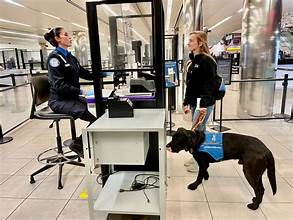
Your service dog will stay with you throughout the screening process — they never have to go through separately or be taken away.
Here’s how it works:
- You and your dog walk through the metal detector together.
- If the leash or harness sets off the alarm, the officer may do a quick hand swab for explosive residue — it’s gentle and only takes a few seconds.
- You can keep your dog’s harness or vest on unless the officer specifically asks you to remove it (rarely needed).
💬 When Max and my son walked through for the first time, the agent smiled and said, “He’s better trained than most travelers.” That kindness meant the world in such a stressful environment.
🧸 Step 3: Prepare Your Child for What to Expect
If your child has sensory sensitivities, the TSA checkpoint can be overwhelming. However, the process is predictable and can be managed with practice and preparation.
Try this before you travel:
- Watch short videos of TSA screenings on YouTube (search “TSA Cares Autism”).
- Create a visual schedule or social story about “What happens at airport security.”
- Practice taking off shoes or jackets at home so it doesn’t feel sudden.
💡 Pro tip: Some airports offer TSA Cares, a free program that provides extra help for travelers with disabilities. You can call ahead (855-787-2227) to request assistance from trained agents who specialize in helping families like yours.

🧍♀️ Step 4: Go Through the Process Slowly
Rushing makes everything more complicated. Give yourself extra time so your child and service dog can move at their own pace.
Here’s the typical order:
- Place bags, shoes, and electronics in bins.
- Walk through the metal detector together (child and service dog side by side).
- Wait while the officer checks your items.
- Collect everything calmly and move to a quieter area before reorganizing.
💬 I always remind my son, “We’ll go slow, one step at a time.” Having Max there by his side keeps him grounded and confident.
🌟 Step 5: After TSA — Celebrate the Success
Once you’re through, take a moment to celebrate the win — even if it felt small. These moments of celebration can reset everyone’s nerves before boarding and build your child’s confidence for next time.
Those few minutes of calm can reset everyone’s nerves before boarding. And each successful experience builds your child’s confidence for next time.
💙 Parent reflection: Our first TSA experience taught me that most people genuinely want to help — and with preparation and patience, flying with a service dog can be a positive experience from start to finish.
✈️ Final Thoughts
TSA doesn’t have to be stressful when you know what to expect. Service dogs are allowed to remain with their handlers at all times, and TSA officers are trained to accommodate travelers with disabilities.
With a little extra prep — and a lot of patience — you can guide your child through security with calm, confidence, and maybe even a few smiles along the way.
Because every successful airport moment is more than just travel — it’s another step toward independence, trust, and adventure. 🐾💙