After the stress of flying, there’s nothing quite like that moment when you finally arrive at your hotel — tired, relieved, and ready to drop everything for a good night’s sleep. But if you’re traveling with a service dog and a child with Autism, that “check-in” moment can bring a whole new wave of questions:
Will the hotel staff understand service animal laws?
Where do we take the dog for bathroom breaks?
Will the housekeeping staff be okay with the dog?
Trust me, I’ve been there. On our first overnight trip with my son’s service dog, Max, I thought the hard part was over once we landed. I quickly realized there was just as much to learn about navigating hotels as there was about airports.
The good news? With the proper preparation (and a little patience), your hotel stay can be calm, comfortable, and even enjoyable for everyone — two-legged and four-legged travelers alike.
Here’s everything we learned about staying in hotels with a service dog — what to expect, what to pack, and how to make your family’s stay smooth from check-in to checkout.
🏨 Step 1: Know Your Rights (and the Hotel’s Responsibilities)
Let’s start with the basics. Under the Americans with Disabilities Act (ADA), hotels must allow service animals in all areas where guests are permitted — including your room, lobby, dining areas, and shared spaces.
Here’s what that means for you:
- No pet fees. Service animals are not pets, so you can’t be charged extra cleaning or pet fees.
- No breed or size restrictions. If your dog is trained and under control, they’re welcome — no matter their size.
- No “proof” required. Staff can only ask two questions:
- Is the dog required because of a disability?
- What task or service does the dog perform?
- Is the dog required because of a disability?
They cannot demand paperwork or certification — though being polite and proactive can go a long way (more on that soon).
💡 Parent tip: Always keep your calm, even if the staff seems unsure. A friendly explanation usually clears things up quickly. I’ve found most people are simply trying to follow policy — they just don’t always know the law.
🧾 Step 2: Call Ahead — Communication Makes Everything Easier
A few days before your trip, call the hotel directly (not just the 1-800 reservation line). Let them know you’ll be traveling with a service dog and a child with Autism.
Ask about:
- Designated relief areas (some hotels have small grassy spaces or designated spots).
- Room location options: Ground-floor rooms or those near exits are great for quick potty breaks.
- Housekeeping preferences: You can request that staff skip or schedule cleaning while your dog is out.
💬 Example script:
“Hi, we’ll be checking in on Friday with a service dog. He’s fully trained and well-behaved, but I wanted to let you know in advance so we can choose a room that makes his potty breaks easier.”
That small courtesy call can prevent awkward surprises at check-in and help staff feel more comfortable welcoming your family.
🐕 Step 3: Pack a ‘Service Dog Hotel Kit’
Just like you, your service dog needs their own travel essentials.
Having a dedicated bag for your dog’s needs ensures you’re fully prepared for your stay.
When you travel, your dog needs their own little suitcase too. Having a dedicated bag for your service dog’s essentials keeps you organized and ready for anything.

🧳 Here’s What We Always Bring:
- Travel water and food bowls
- Dog food and treats (pack extra in case of delays)
- Waste bags
- Towel or blanket for the floor
- Brush or wipes (to control shedding)
- Favorite toy or chew (comfort item)
- Extra leash and harness
- Health/vet records (just in case)
💡 Pro tip: Bring a small mat or blanket for your dog to lie on in the hotel room. It gives them a defined “place” and helps keep fur off the carpet or bedding. Max curls up on his blanket as soon as we unpack — it’s his signal that this is our new temporary home.
🌿 Step 4: The First Thing to Do After Check-In
Before you even unpack, find the nearest relief area.
Take your service dog for a short walk around the property so they can:
- Go potty and decompress after the trip
- Learn the new smells and layout.
- Feel grounded in their new environment.
💬 For my son, this also helps with transitions. He loves “helping” Max find the potty spot — it gives him a sense of routine and control after the unpredictability of travel.
If your hotel doesn’t have a designated relief area, ask staff where it’s best to take your dog. Be sure to clean up every time — a little courtesy goes a long way toward keeping service animals welcome for everyone.
🛏️ Step 5: Create a Calm, Familiar Environment.
Hotel rooms can be overwhelming with their new smells, sounds, and textures. Creating a familiar environment can help your child and service dog adjust more easily.
Hotel rooms can feel strange — new smells, new sounds, new textures. That’s a lot of sensory input for an autistic child and a service dog.
Try These Simple Tricks:
- Keep the lighting soft. Harsh hotel bulbs can trigger sensory overload — pack a small nightlight or use lamps instead of overhead lights.
- Use familiar bedding or scents. Bring your child’s pillowcase or small blanket from home to make bedtime feel familiar.
- Maintain routine. Stick to customary bedtime rituals — brushing teeth, reading, cuddles with the service dog — even in a new space.
💬 The first night we stayed in a hotel, my son was too overstimulated to sleep. Once I turned off the bright light, pulled out his weighted blanket, and let Max curl beside the bed, he relaxed within minutes. Routine is everything.
🧹 Step 6: Respect Staff & Housekeeping Policies
Most hotel staff are kind and accommodating, but not everyone has experience with service animals. Clear communication helps avoid misunderstandings.
What Helps:
- Leave a “Do Not Disturb” sign if your dog will be alone briefly (though legally, service dogs should stay with you unless you’re nearby).
- Let housekeeping know the best time to clean — ideally when you and your dog are out.
- Remind staff not to pet or interact with your dog while he’s working.
💬 I once came back to find a sweet housekeeper had left Max a note saying, “Good boy!” on a towel animal she folded like a dog. It made my day — small kindnesses like that remind you how good people can be. Showing appreciation for such gestures not only makes the staff feel valued but also strengthens the bond between you and the hotel.
🐾 Step 7: Dining & Public Spaces
Hotels must allow service dogs in all areas where guests are permitted, including restaurants and breakfast areas.
Still, it’s helpful to choose quieter times to eat — fewer crowds mean less sensory overload for both your child and your dog.
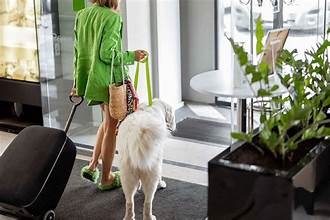
💡 Pro tip: Bring a small towel or mat for your dog to lie on under the table. It helps them settle and signals to other guests that they’re working.
If your child struggles with noise, consider getting meals to-go or eating outside on a patio. Many hotels are happy to accommodate.
🚪 Step 8: Handling Noise and Sensory Overload
Hotel hallways can be noisy — doors slamming, people talking, ice machines humming. If your child is sensitive to sound, pack a small white noise machine or use a calming playlist on your phone.
We’ve found it helps to make a “quiet corner” in the room — usually between the bed and wall — where my son can decompress with his fidgets and Max by his side.
💬 One night, fireworks from a nearby event startled both of them. Max immediately performed his deep-pressure task — lying gently across my son’s lap. Within minutes, my son was calm again. It was one of those moments that reminded me how amazing service dogs truly are.
❤️ Step 9: Check-Out with Kindness
When it’s time to leave, take a few minutes to:
- Check for any stray dog hair or crumbs
- Wipe down surfaces if needed.
- Leave a quick thank-you note for the staff.
These little gestures help ensure other service dog teams will always be welcomed back.
I also like to let the front desk know how kind the staff was — especially if someone went out of their way to help. Recognition matters, and kindness builds awareness.
🌟 Final Thoughts
Traveling with a service dog adds an extra layer of preparation — but it also brings comfort, independence, and peace of mind that make every trip worth it.
Staying in hotels can feel daunting at first, but over time, it becomes second nature. You’ll learn what works best for your family, and each new stay will get easier.
For us, every trip with Max is a reminder of how far we’ve come — from fearing meltdowns to enjoying new adventures together. The world feels a little more open, a little more possible, when you know your child is supported, understood, and safe.
So pack that service dog kit, book the trip, and trust that you can do this — because you absolutely can. 💙🐾