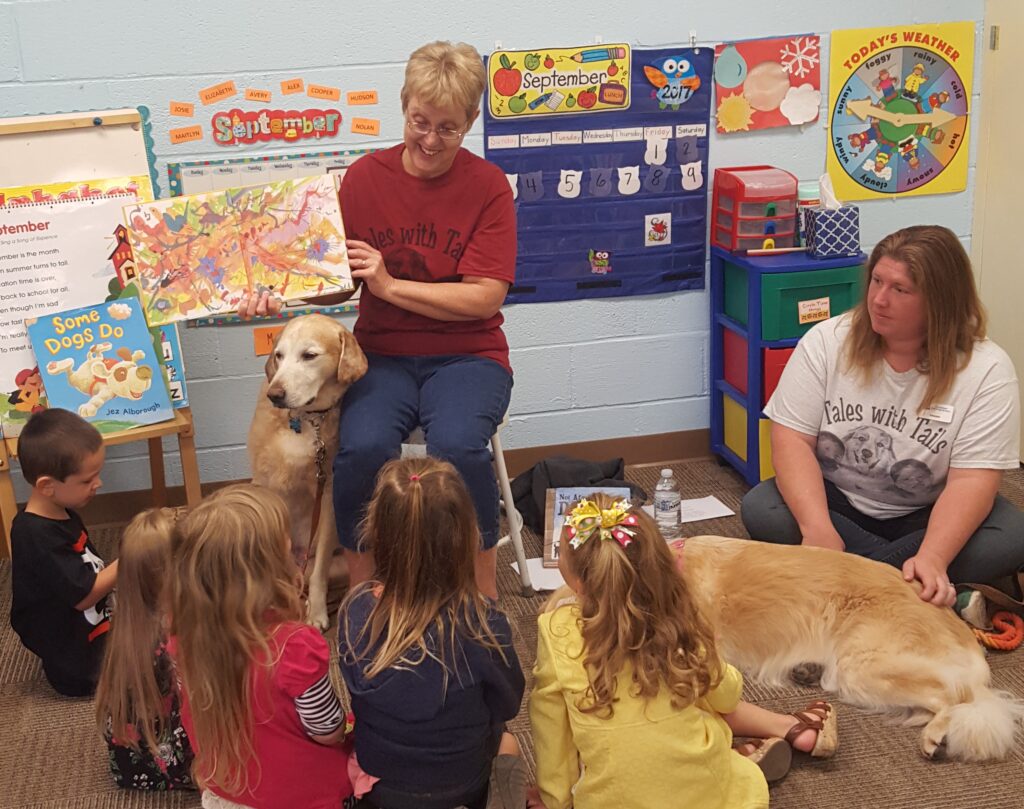
When my son, accompanied by his service dog, first stepped into the school, I anticipated the morning routines to be the most challenging part. However, to my surprise, the biggest hurdle wasn’t our daily routine, but rather the need to educate others about his rights.
Most teachers genuinely want to help. They care about their students. But many simply don’t understand the laws around service animals in schools — and that leads to confusion, hesitation, or even accidental rule-breaking. So today, let’s clear up three of the most common misconceptions we’ve run into, and help teachers feel more confident when a student walks in with a working service animal.
#1: “Service Animals Need Special Permission or Paperwork to Come to School.”
I remember one teacher nervously asking me if I had any “official paperwork” or a “certificate” for my son’s service dog. The truth? There is no official federal certification system for service animals, and schools cannot require special paperwork just to allow them.

What the Law Says
Under the Americans with Disabilities Act (ADA), a student does not have to provide documentation to prove their dog is a service animal. Schools may ask only two questions:
- Is the dog a service animal required because of a disability?
- What task or work has the dog been trained to perform?
That’s it. No medical records. No registration form. No ID badge.
Service dogs are not emotional support animals — they are trained to do specific tasks, and that alone grants them legal access to school environments.
#2: “Service Animals Are a Distraction in the Classroom.”
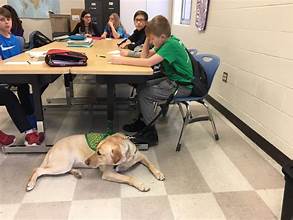
Before my son’s dog joined him in class, I heard a lot of “Won’t that be distracting?” or “How will the other students focus with a dog in the room?” But honestly? On most days, our service dog spends the entire class under a desk, quietly working.
Here’s the Reality
Most service animals are trained to:
- Ignore other students
- Stay calm during loud noises or commotion.
- Remain focused on their handler.
They are trained to blend into the school routine—not to become part of the excitement.
Moreover, the presence of a service dog in the classroom can have a positive impact. It can teach classmates patience, respect for boundaries, and empathy. They quickly learn that the dog is not a pet, but a working partner. Sometimes, they even become gentle reminders for classmates:
👉 “Shhh — he’s working. We can’t pet him right now.”
#3: “Teachers Are Responsible for Caring for the Service Animal.”
This one causes a lot of hesitation. Some teachers worry they’ll need to walk, feed, or supervise the dog during the day. That can feel overwhelming — especially with a classroom full of students to care for.
The Truth
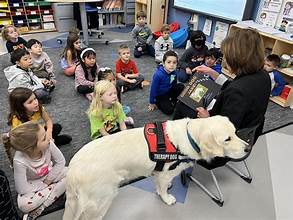
A teacher is never legally responsible for caring for a student’s service animal. According to the ADA:
- The student (or their aide) cares for the dog.
- Teachers are not required to:
- Take the dog outside.
- Feed or water the do.g
- Provide relief time
- Supervise training
- Take the dog outside.
Schools can include service-animal support in an IEP or 504 plan, especially if mobility or independence is limited—but the responsibility never falls solely on the classroom teacher.
How Teachers Can Support Service Animal Teams — Without Extra Work
Teachers don’t have to become experts. But a few small actions can make a huge difference:
✔ Use clear classroom rules about when students can interact with the dog.
✔ Learn the basic commands or signals — just in case the student needs help.
✔ Ask about the dog during IEP/504 meetings, so you understand its job.
✔ Treat the service animal as part of the student’s support system — not an inconvenience.
Most importantly, it helps when teachers approach service animals with curiosity instead of fear. Questions are okay. Learning is okay. And yes — mistakes are okay, too. What matters most is the willingness to understand and support the student.
Final Thoughts
Having a service animal in the classroom isn’t a burden — it’s an opportunity. It’s a chance to create a more inclusive, compassionate school environment for everyone. And when we support teachers with the correct information, everyone wins — mainly the student who needs that service animal by their side.
If you’re a parent, advocate, or educator, you’re not alone. We’re learning together — one school day at a time.