💛 The Goal We All Quietly Carry
If you’re anything like me, there’s a thought that lives quietly in the back of your mind:
👉 “Will my child be able to live independently one day?”
It’s not something we always say out loud. But it’s there.
In the small moments.
In the big decisions.
The way we guide them every single day.
For parents of children with autism and other special needs, teaching life skills isn’t just about chores or routines.
It’s about:
- Confidence
- Safety
- Dignity
- And giving our children the tools they need to navigate the world
And here’s the good news:
👉 Independence isn’t something that happens all at once.
👉 It’s built slowly—step by step, skill by skill.
🧠 What Are Life Skills (And Why They Matter So Much)
Life skills—also called daily living skills—are the everyday tasks we often take for granted.

Things like:
- Getting dressed
- Brushing teeth
- Preparing simple food
- Managing time
- Communicating needs
- Understanding boundaries
For neurodivergent kids, these skills may not come naturally. They often need to be explicitly taught, practiced, and repeated.
But here’s the key:
👉 Every skill your child learns builds confidence and independence
And that adds up in powerful ways over time.
🌱 Start Where Your Child Is (Not Where You Think They Should Be)
This is one of the hardest—but most important—mindset shifts.
It’s easy to compare:
- Other kids
- Milestones
- Expectations
But progress for our kids doesn’t follow a straight line.
Instead of asking:
❌ “What should they be doing by now?”
Try asking:
✅ “What’s one small step we can build today?”
That’s where growth begins.
🪜 Step-by-Step Teaching (The Game Changer)
Teaching life skills works best when you break tasks into small, manageable steps.
This is often called “task analysis.”
💡 Example: Brushing Teeth
Instead of:
👉 “Go brush your teeth.”
Break it down:
- Pick up a toothbrush
- Put toothpaste on
- Turn on the water
- Brush top teeth
- Brush the bottom teeth
- Rinse
- Put the toothbrush away
It may feel like a lot—but to your child, it creates clarity.
👉 Clear steps = less overwhelm = more success
👀 Use Visual Supports (They Work Better Than Words)
Many children with autism and ADHD process visual information more easily than verbal instructions.
That’s why visual supports can be a total game-changer.
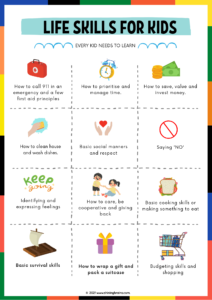
💛 Ideas to try:
- Picture charts
- Step-by-step checklists
- Visual schedules
- First/Then boards
For example:
👉 “First brush teeth → Then iPad time”
This:
- Reduces resistance
- Builds independence
- Creates predictability
(And yes… this is another amazing printable idea for you 👀)
⏰ Build Routines That Stick
Routines are where independence really starts to grow.
When something becomes part of a daily rhythm, your child doesn’t have to rely on constant reminders.
💡 Focus on:
- Morning routines
- After-school routines
- Bedtime routines
Start small.
Even one consistent routine can make a huge difference.
🎯 Focus on Real-Life Skills First
It can be tempting to focus on academic skills—but life skills are just as important (if not more).
🌿 Start with skills like:
- Getting dressed
- Hygiene (you just covered this 👏)
- Cleaning up toys
- Simple food prep
- Packing a backpack
- Following a basic schedule
These are the skills that build:
👉 Independence in real, everyday life
🧩 Practice in Real Situations
Life skills stick best when they’re practiced in real life—not just talked about.
💛 Examples:
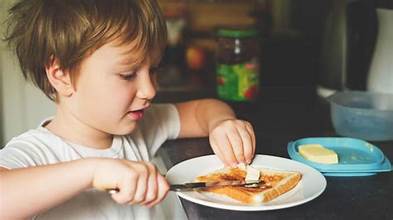
- Let them help make a sandwich
- Have them choose their clothes
- Practice ordering food
- Let them carry their own bag
Yes—it might take longer.
Yes—it might be messy.
But that’s where learning happens.
🤝 Give Support—Then Slowly Step Back
This part can be emotional (I know it is for me).
At first, your child may need:
- Full support
- Hand-over-hand guidance
- Constant reminders
But over time…
👉 You slowly step back.
- From full help → to prompting
- From prompting → to independence
And one day, you’ll notice:
👉 They’re doing it on their own.
🎉 Celebrate Progress (Even the Small Wins)
Progress doesn’t always look big.
Sometimes it looks like:
- Trying something new
- Completing one step independently
- Remembering part of a routine
Celebrate it.

Because those small wins?
👉 They’re building something much bigger.
Confidence.
😔 The Fear We Don’t Always Say Out Loud
Let’s talk about the part that sits heavy in our hearts.
The “what ifs.”
- They can’t live independently?
- What if they always need support?
- What will their future look like?
I’ve had those thoughts too.
And maybe you have, too.
💛 A Gentle Truth You Need to Hear
Independence doesn’t have to mean doing everything alone.
For some kids, independence might look like:
- Living with some support
- Having structured routines
- Working a job they love
- Making their own choices in their own way
👉 Independence is not one-size-fits-all
And that’s okay.
🌱 You Are Building Their Future Right Now
Every time you:

- Teach a skill
- Practice a routine
- Show patience
- Encourage effort
You are helping shape your child’s future.
Even on the hard days.
Even when it doesn’t feel like progress.
👉 It’s happening.
💛 Final Thoughts
You don’t have to teach everything at once.
You don’t have to have it all figured out.
Start small.
Stay consistent.
Celebrate progress.
Because independence isn’t built in big leaps.
👉 It’s built in small, everyday moments—just like these.
And you are already doing more than you realize.