Sometimes confidence doesn’t come easily.
For many children with autism, the world can feel overwhelming, unpredictable, and at times… just too much.
Simple things—like going into a store, trying something new, or being in a crowded place—can feel big and intimidating.
And as parents, we see it.
We see the hesitation.
The anxiety.
The moments where our child wants to try—but just can’t quite get there.
That’s why so many families begin to wonder:
“Could a service dog help my child feel more confident?”
For some children, the answer is yes—and the changes can be incredibly meaningful.
Confidence Doesn’t Always Look the Way We Expect
When we think of confidence, we often picture big, bold moments.
But for children with autism, confidence often shows up quietly.
It looks like:
- Walking into a new place without fear
- Trying something they would have avoided before
- Staying calm in situations that used to feel overwhelming
- Reaching out instead of shutting down
These are powerful moments.
And sometimes, a service dog helps make them possible.
The Power of a Constant, Calming Presence
One of the biggest benefits parents notice is the sense of calm a service dog brings.
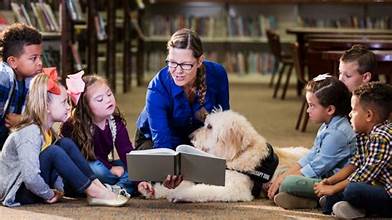
A service dog is:
- Predictable
- Steady
- Non-judgmental
In a world that can feel overwhelming, that consistency matters.
For many children, just having their dog nearby can:
- Reduce anxiety
- Provide emotional grounding
- Help them feel safe enough to try new things
Helping Children Feel Safe in Public
Public spaces can be one of the biggest challenges.
Noise, crowds, and unpredictability can quickly lead to stress or meltdowns.
A service dog can help by:
- Providing a physical anchor
- Offering deep pressure during anxiety
- Creating a sense of personal space
Parents often notice their child becoming more willing to:
- Go out in public
- Stay longer in challenging environments
- Participate in family outings
And that can be life-changing.
Encouraging Independence (In a Gentle Way)
Confidence and independence go hand in hand.
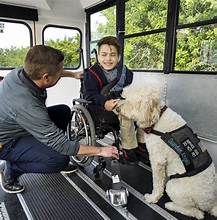
When a child feels supported, they’re more likely to:
- Try new tasks
- Take small risks
- Explore their environment
A service dog doesn’t replace support—it adds to it.
It becomes a bridge between:
👉 “I can’t do this.”
and
👉 “Maybe I can try.y”
Building Emotional Regulation
Many children with autism struggle with emotional regulation.
A service dog can help by:
- Interrupting escalating behaviors
- Providing calming sensory input
- Acting as a grounding tool during overwhelm
Over time, this can help children:
- Recover more quickly from stress
- Feel more in control of their emotions
- Build confidence in handling difficult moments
The Social Connection Piece
This is something many parents don’t expect.
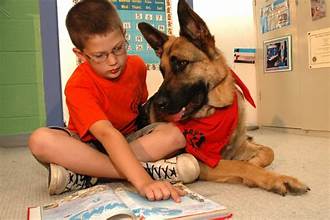
A service dog can naturally open doors for social interaction.
Other children may:
- Ask about the dog
- Approach in a friendly way
- Create opportunities for connection
For some children, this makes social situations feel less intimidating.
The dog becomes a shared focus—taking some of the pressure off.
It’s Not Just the Child Who Feels the Difference
Parents often feel it too.
There can be:
- Less anxiety about safety
- More confidence in leaving the house
- A sense of support in challenging moments
It doesn’t remove every challenge—but it can make daily life feel more manageable.
A Gentle Reality Check
While the benefits can be powerful, it’s important to remember:
A service dog is not a cure.
It won’t:
- Eliminate all struggles
- Instantly create confidence
- Replace other supports
But for the right child, it can be a meaningful part of their support system.
A gentle reminder for parents: If you’re considering a service dog, it’s okay to feel hopeful-and unsure at the same time.
If you’re considering a service dog, it’s helpful to assess your child’s unique needs and consult with professionals to determine if this support aligns with your goals. It’s okay to feel hopeful—and unsure at the same time.
You’re exploring options, and learning about reputable service dog organizations can help you understand the process, costs, and what to expect. You’re asking questions, and that’s an important step in making an informed choice.
You’re asking questions.
You’re doing what’s best for your child.
And that matters.
Conclusion
Confidence doesn’t always come in big, obvious moments.
Sometimes, it grows quietly—
with support, consistency, and time.
For some children, a service dog becomes part of that journey.
Helping them feel:
- Safer
- Calmer
- More willing to try
And those small shifts?
They can turn into something really powerful over time 💛