
There are conversations we expect to have as parents.
And then there are the ones that catch us off guard.
When your child has Autism and ADHD, puberty doesn’t just bring body changes. It brings questions, impulses, boundary confusion, and sometimes overwhelming behaviors.
The good news?
Consent, privacy, and body boundaries can absolutely be taught.
But they must be taught differently.
Not vaguely.
Not once.
Not with hints.
Explicitly. Calmly. Repeatedly.
And without shame.
Why Vague Language Doesn’t Work
Many of us grew up hearing:
“Be appropriate.”
“Stop being weird.”
“Don’t act like that.”
For neurodivergent kids, that language is too abstract.
Autistic and ADHD brains thrive on clarity.
Instead of:
“Don’t be inappropriate.”
Try:
“We do not touch other people’s bodies without permission.”
“If someone says no, you stop immediately.”
“Private body behaviors happen only in your bedroom, alone, with the door closed.”
Clear beats subtle every time.
Step 1: Teach Private vs. Public Explicitly
This is not intuitive for many autistic kids.
Break it down like this:
Public Spaces:
- Living room
- School
- Stores
- Outside
- Other people’s homes
Private Spaces:
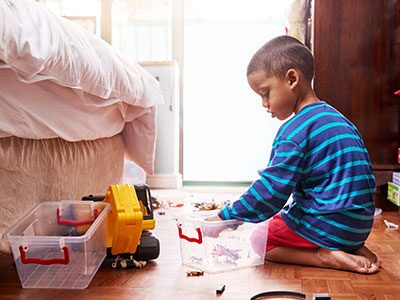
- Your bedroom
- Bathroom (for hygiene only)
- Doctor’s office (with parent present)
Important clarification:
The bathroom is private for hygiene, not a space for sexual behavior, especially since public restrooms are shared.
That distinction matters.
Step 2: Teach Consent as a Skill
Consent is not just “don’t touch.”
It’s a 3-step process:
Stop – Ask – Respect
- Stop your body.
- Ask permission.
- Respect the answer immediately.
Practice this outside of emotional moments.
Role-play:
“Can I hug you?”
“What if I say no?”
“What do you do next?”
Repetition builds muscle memory.
Step 3: Identify the “Buzzy Body” Signal
As we discussed last week, many behaviors have warning signs.
Teach your child to label it:
- “Does your body feel buzzy?”
- “Are you feeling restless?”
- “Is your brain feeling fast?”
When they recognize the feeling, give them options:

- Push-ups
- Wall sits
- Carry something heavy
- Cold water
- Go to the bedroom with the door closed.
We are not punishing the urge.
We are giving it a safe lane.
Step 4: Increase Supervision Without Panic
During puberty, structures often need to increase in size.
That might mean:
- No unsupervised time with peers for a period
- Clear rules about isolation
- Checking in during social interactions
This is not failure.
It is protective scaffolding.
Independence grows from safety.
Step 5: Correct Without Crushing
If a boundary is crossed:
Stay calm.
Use a short script:
“That’s not okay. Private behavior. Bedroom.”
No long lecture.
No dramatic reaction.
No shaming language.
Later, when calm, revisit:
“What could you do differently next time?”
We want accountability without identity damage.
The Emotional Side for Parents
Let’s be honest.
These conversations are uncomfortable.
You may feel:
- Embarrassed
- Afraid of judgment
- Worried about the future
- Grieving the “little kid” stage
That’s normal.
But here’s the steady truth:
Teaching consent and boundaries now protects your child later.
You are not overreacting.
You are preparing.
What Matters Most
Look for these signs:
- Remorse
- Willingness to talk
- Ability to admit urges
- Engagement in therapy
Those are growth markers.
Progress is not perfection.
It is awareness, repetition, and structure over time.
Final Encouragement
If you’re in this season, I want you to hear this clearly:
You are not ruining your child by talking about consent.
You are not shaming them by teaching boundaries.
You are not failing because supervision increased.
You are building skills.
And skill-building during puberty may be one of the most loving things you ever do.